Case Study — Catalog No. 01

Serendipi-Tea

Designing an innovation hub experience to foster authentic connection among startup founders in accelerator spaces.
Client
StartX — Stanford
Role
Head User Researcher
Timeline
1 Quarter, 2025
Team
Team Jello (3 Designers)
Serendipi-Tea final installation
Project Overview
A card-based conversation tool built through a human-centered design process, prototyped and tested with founders across the StartX accelerator community.
Built with Team Jello (a team of 3) as part of Design 121 at Stanford's d.school, in partnership with StartX. I led the project as Head User Researcher.
The Challenge
How might we use the human-centered design process to design an innovation hub for the next generation of startup founders at Stanford Research Park?
01Needfinding
17
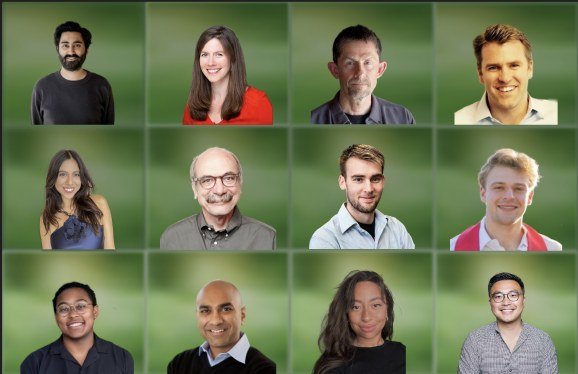
People Reached
6
Interviews Conducted
4
Founder Segments
Key takeaway: lots of diversity, in tenure, background, and what "connection" even means to a founder.
02Synthesis
Segment A
Seasoned Founders
Keeps up with the latest tech trends and is always looking for ways to boost productivity, typically moving between spaces to work, talk, and present his newest slide deck.
Segment B
Brand New Founders
Wants more genuine talks with other founders beyond concise business chat and tool-sharing, but feels an invisible gap that keeps those conversations from happening.
Segment C
Underrepresented Founders
Feels like funding is her largest barrier to entry, largely due to how she's perceived as a minority founder, but remains resilient and channels that feeling to keep pushing.
User Group — StartX
Brand New Founders
How might we promote serendipitous conversations between founders?
New StartX founders who lack an environment conducive to organic, serendipitous connection with one another, making the average conversation feel transactional.
JB
POV Statement
New members of the StartX community crave an environment free of artificial, network-based connection, to ensure the relationships they form through StartX programming have a lasting impact.
03Prototyping
Problem Framing
In environments where every conversation feels like a pitch, genuine and authentic connection always feels like it's placed on the back burner.
VS
StartX founders feel naturally authentic with each other, seamlessly connecting with other members of the community as if they were family.
TL;DR: we want founders to create deeper, lasting connections.
Three Prototypes
Enter Look Around Snacks We're All Humans Card Game Photo Exit
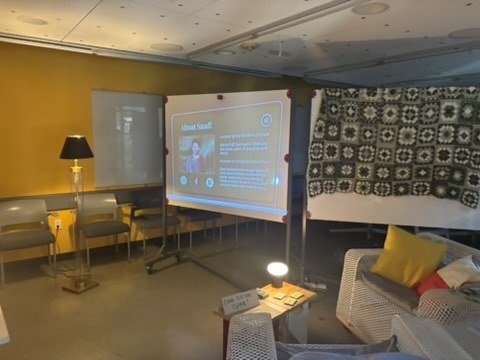
Founder Quilt prototype
Prototype 01
Founder Quilt (X)
Elevates underrepresented voices by displaying local founders.
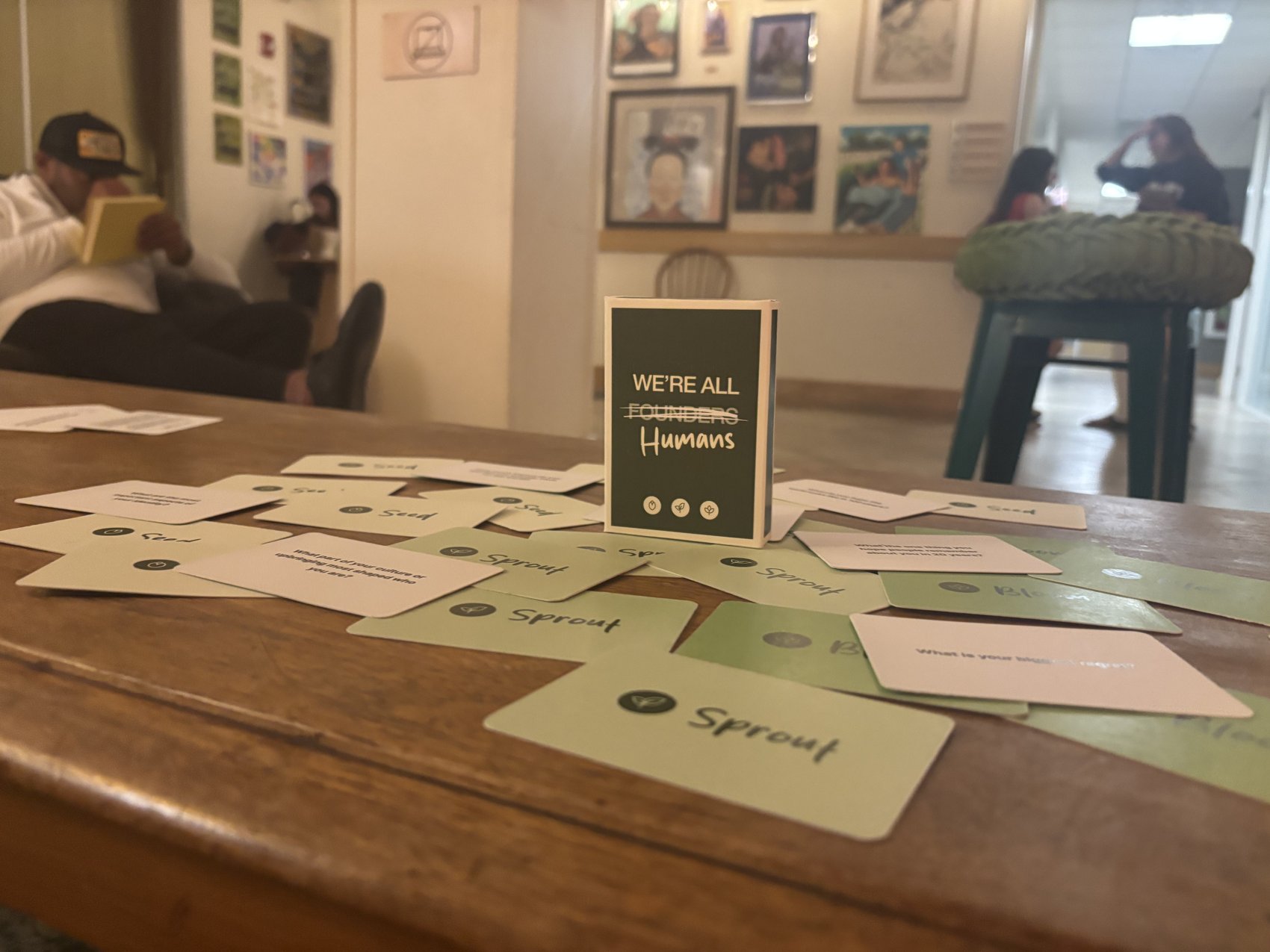
We're All Humans prototype
Prototype 02
We're All Humans
Humanizes founders by creating space for personal discussion.
Third Space prototype
Prototype 03
Third Space
Creates a cozy environment inside a typically busy startup ecosystem.
Insights
Third Spaces Deepen Connection
People were willing to interact with our prototype, typically in pre-existing groups.
We Need a Wide Variety of Topics
When the focus is on getting personal, people get deep.
Smaller + Cozier = Intimacy
Conversations feel deeper with smaller groups of people (2–3).
Food Is a Way to Invite People
Food transitions to being less important than an intrinsic desire to connect.
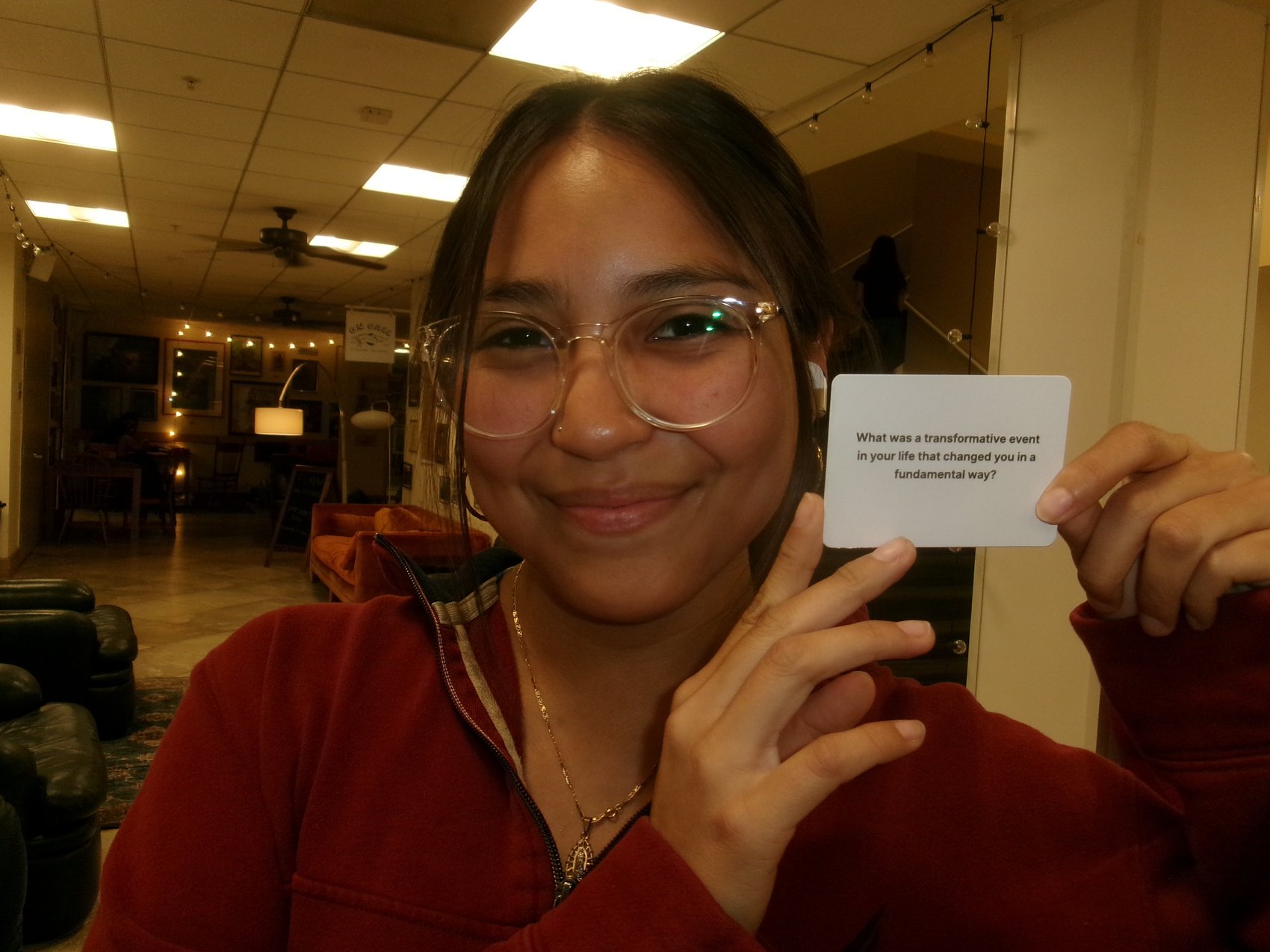
Creating the Cards

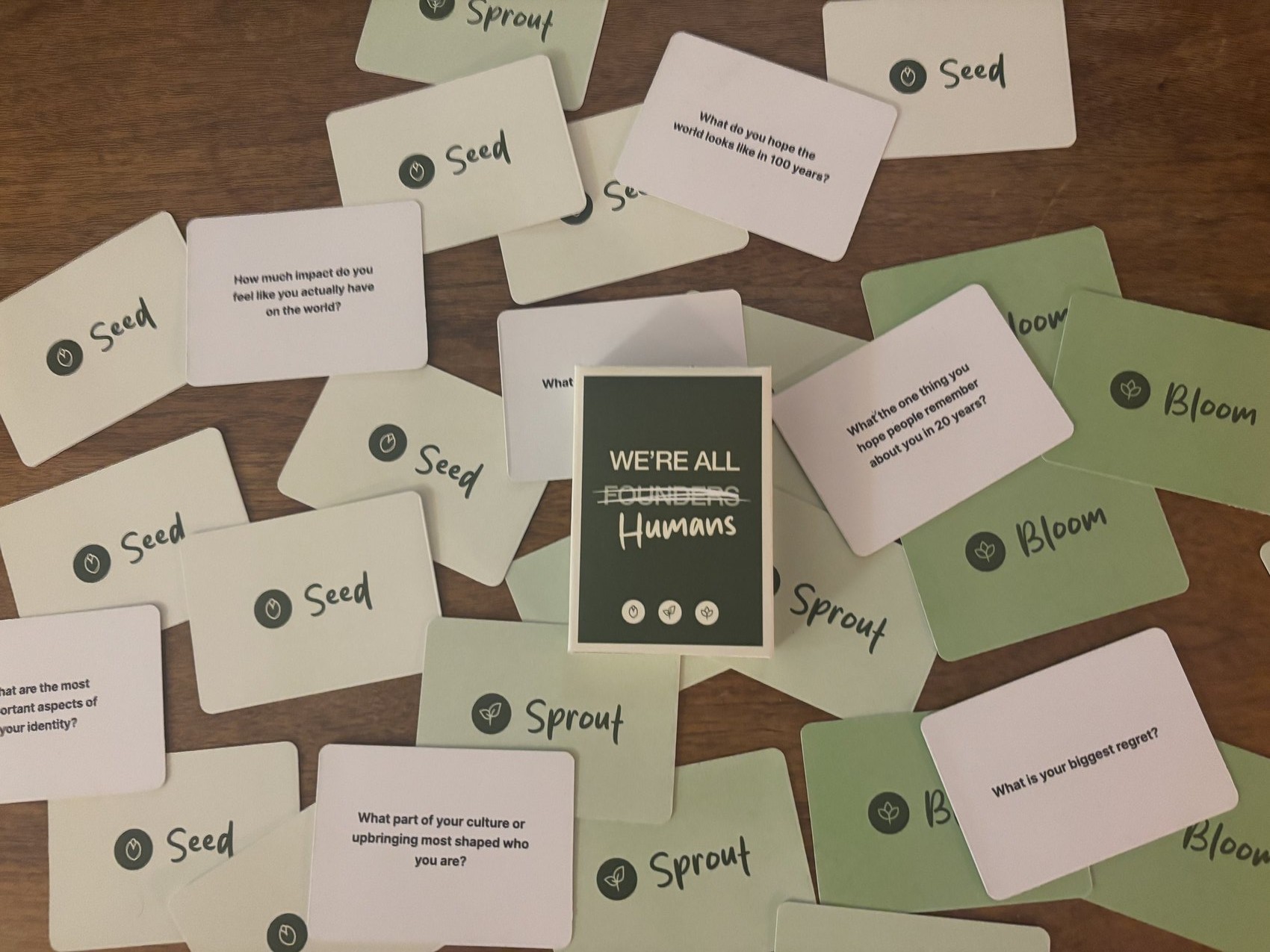
Our cards were heavily inspired by the game We're Not Really Strangers, ranging from light reflection (Seed level) to deeper conversation (Bloom level), plus questions written directly from the experiences of startup founders.

Cards were designed in Figma, printed on cardstock, corner-cut for a rounded feel, then sprayed with lacquer for a refined finish. We also built a custom box with a "How to Play" card.

View the card deck on Figma →
Seed"Who was your biggest role model growing up?"
Sprout"Who was your childhood best friend?"
Bloom"What's something you're grieving, even if it's not obvious loss?"
Creating the Experience
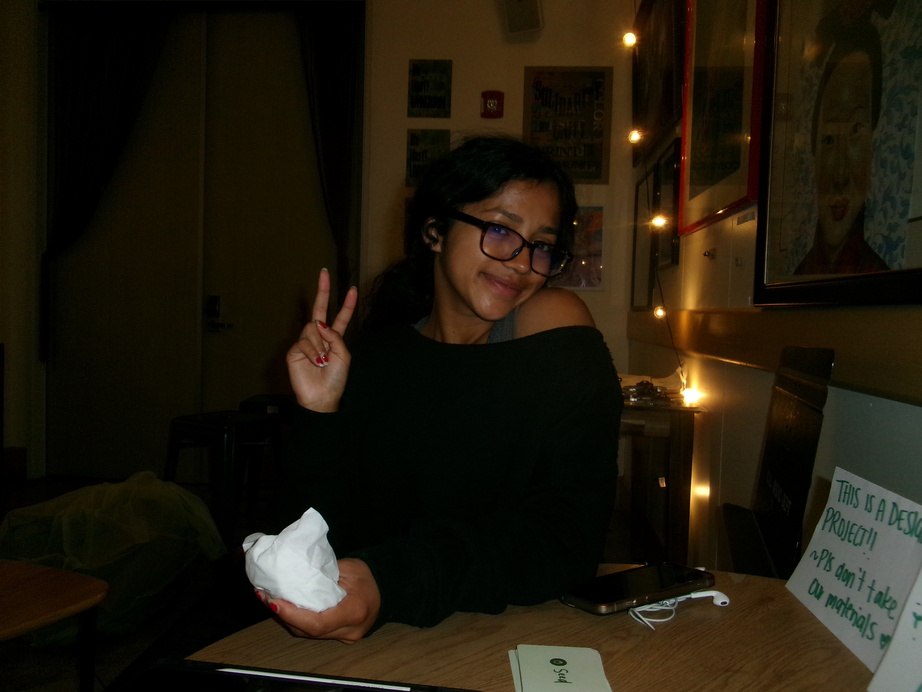
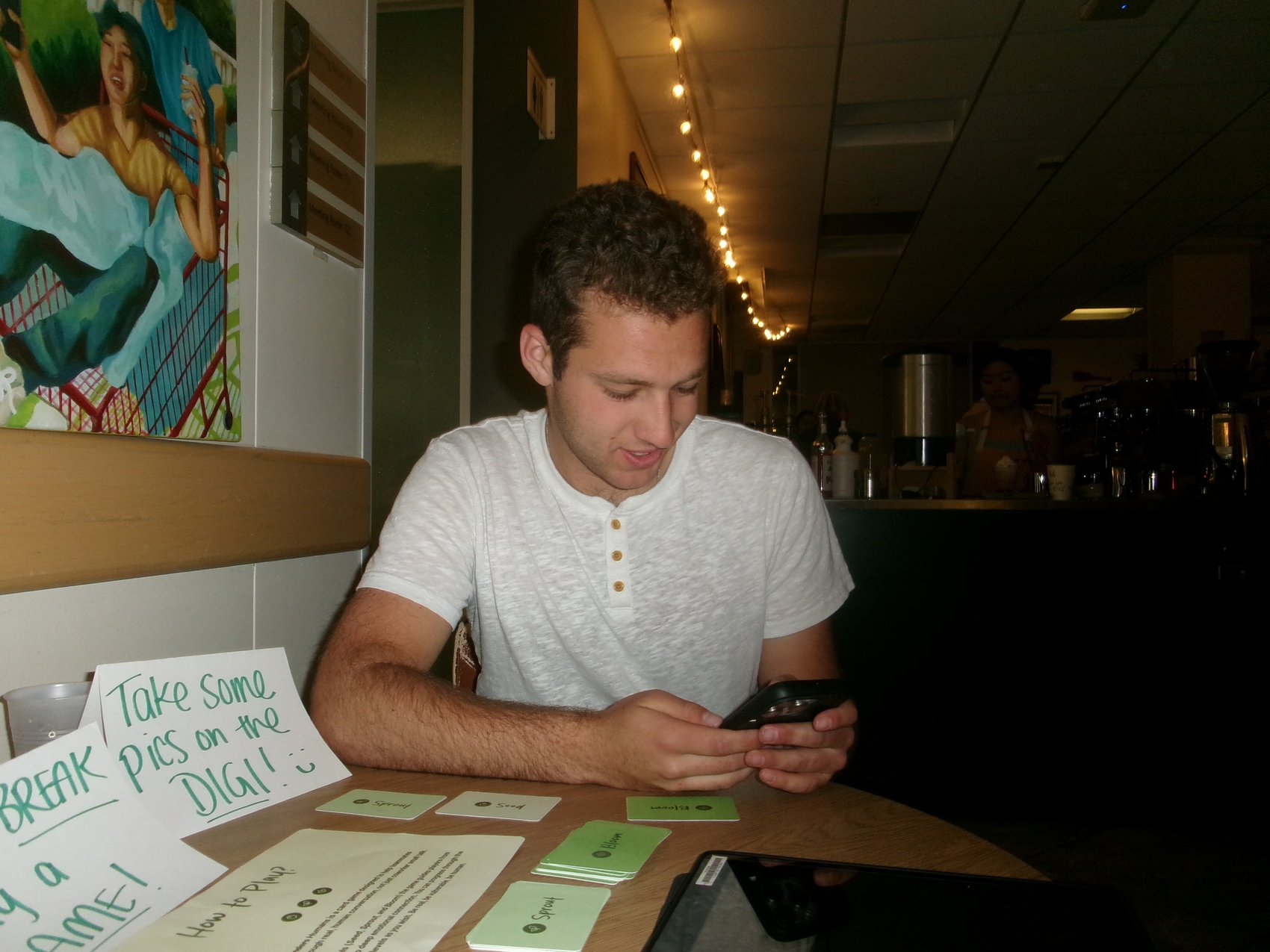
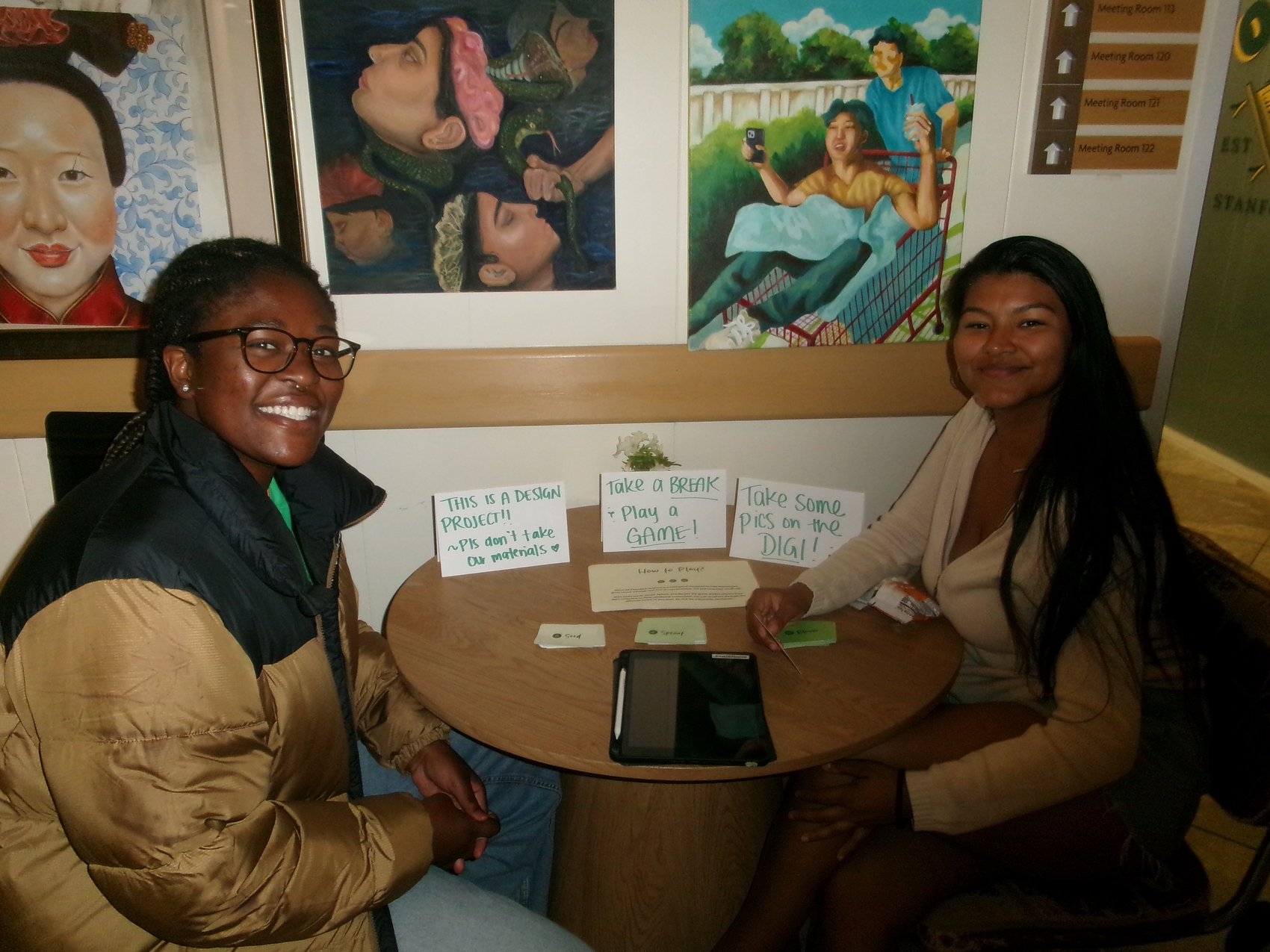
Cards were placed at a campus cafe space with signage, and left to let the experience run on its own. A digital camera was placed within the set-up so users could document their own experience.
04Final Solution @ StartX
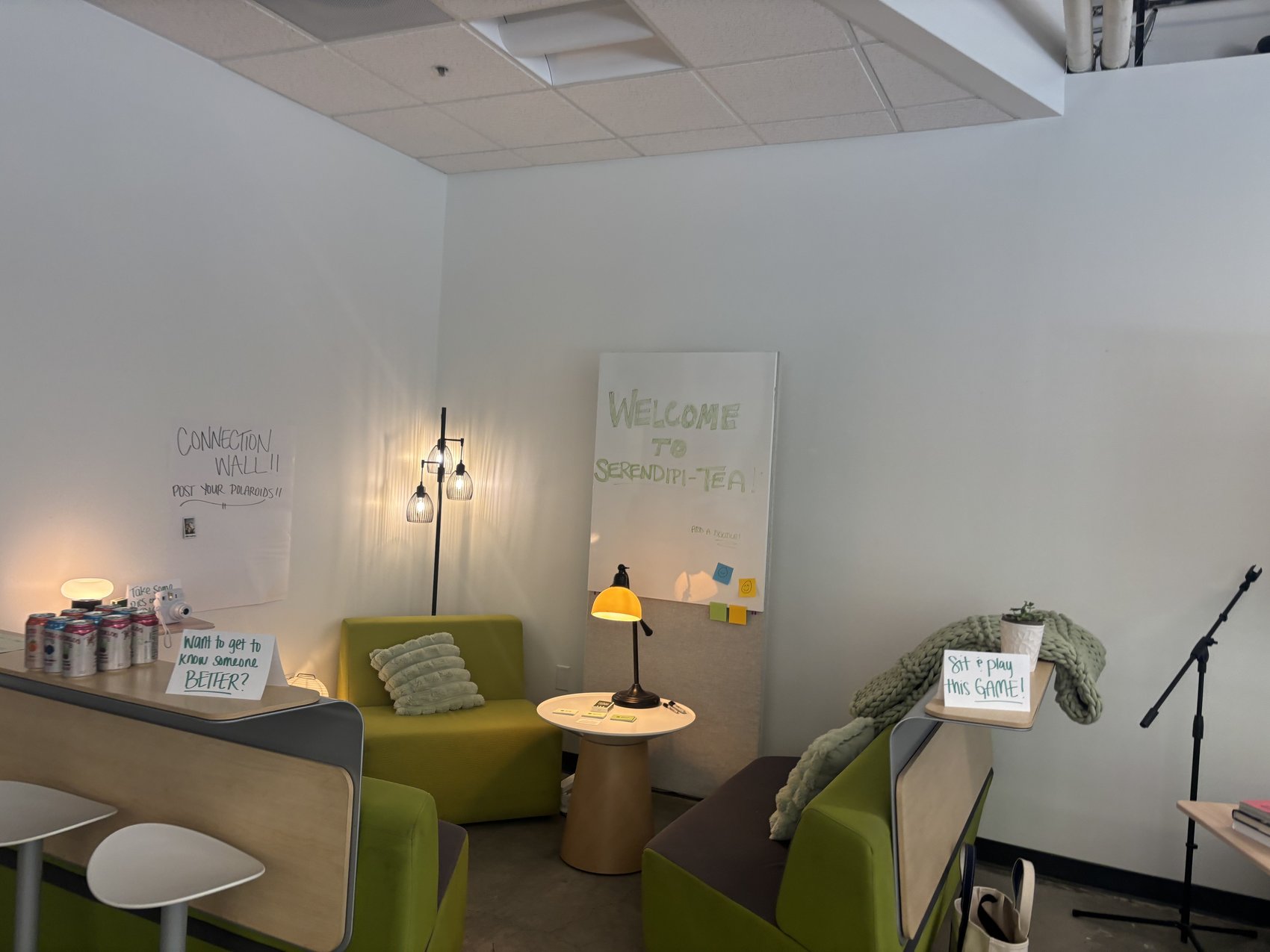
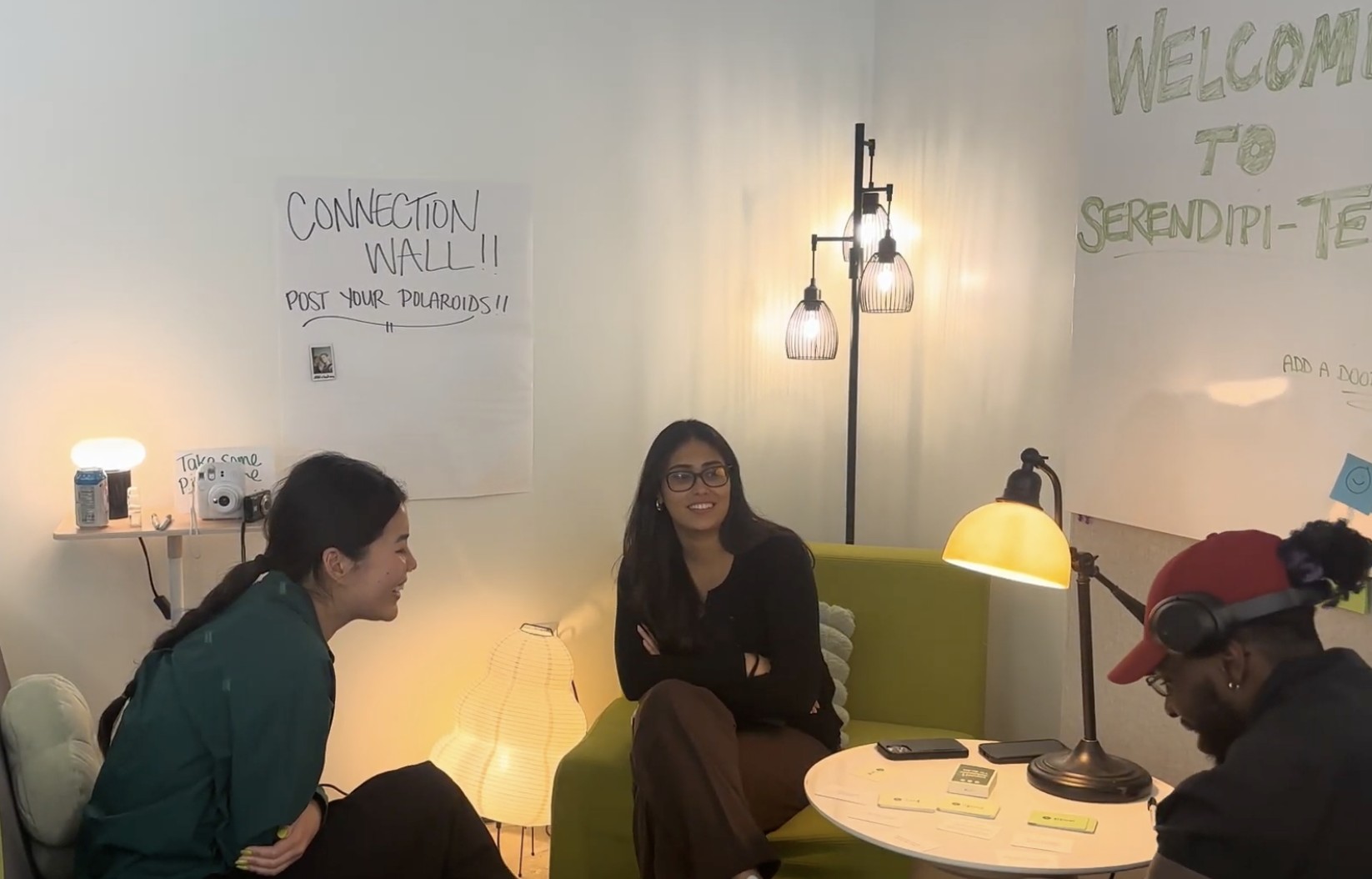
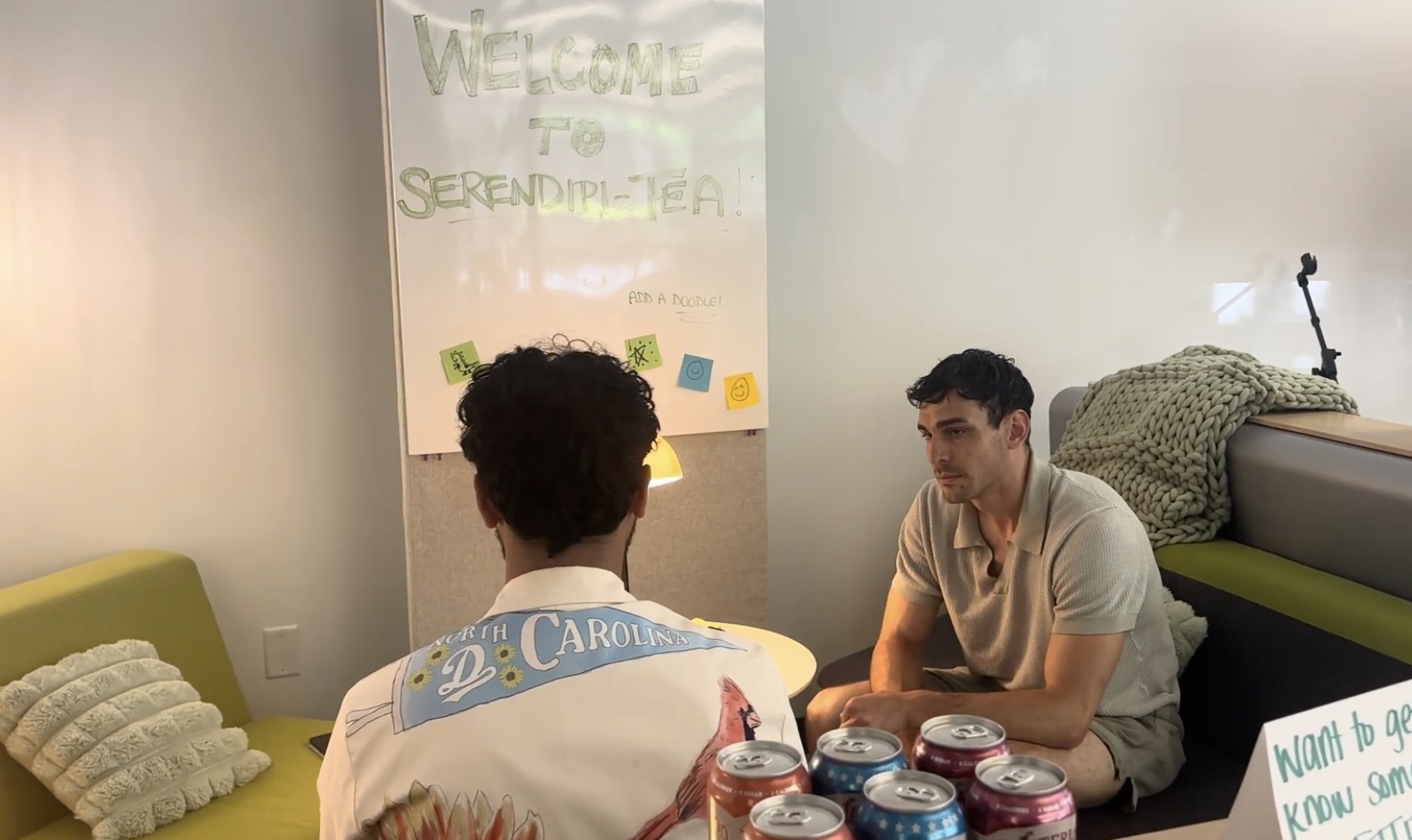
Final Serendipi-Tea installation at StartX
Connection Wall
Food / Drinks
We're All Humans Card Game
Final Solution — Watch the Recap
05Design Result
Variety of ConversationLove, death, politics, insecurities, etc.
Variety of Strong EmotionLaughter, reflection, surprise
Shortest Playtime35 min
Longest Playtime45 min

One of the more surprising outcomes was how quickly the founders' guards came down. Most of them spend their days pitching, networking, and performing a version of themselves built for a room full of investors or competitors. But once there was a vessel built strictly for connection, with no ask, no agenda, and nothing to prove, that professional mask seemed to just fall away. Conversations that started as polite small talk kept sliding into something more honest: grief, doubt, the parts of running a company nobody really talks about. It made the case that founders don't necessarily need more networking spaces. They need spaces that are explicitly not that.

06Takeaways
Rooting My Work in User Needs
My group and I were unfamiliar with the experience of startup founders. This project stemmed directly from the conversations we had with them, and the pain points we noticed.
Designing for Emotional Impact
This project taught me that meaningful design goes beyond solving logistical problems. It can create space for vulnerability, connection, and authentic human interaction.
Conversation as a Designed Experience
This project reframed dialogue itself as something that can be intentionally crafted through prompts, pacing, environment, and material interaction.
Listen to a Tune